The Roles That Doubled. The Roles That Didn't. Five Years of Insurance Technology Salaries
The Roles That Doubled. The Roles That Didn't. Five Years of Insurance Technology Salaries
The Roles That Doubled. The Roles That Didn't. Five Years of Insurance Technology Salaries
Every year, salary conversations in insurance technology follow a predictable pattern. Candidates cite inflated benchmarks. Hiring managers cite budget constraints. Neither side has clean data to anchor the discussion.
So we built some.
The Cavehill Insurance Technology Salary Benchmarking Guide covers 40+ roles across three markets - London Market, regional UK, and Dublin - tracking permanent salaries and contract day rates year by year from 2022 to 2026. Before you download it, here is the story behind the numbers.
2022-2026: The Arc
The five-year period divides into three phases.
2022 was a historic peak. Post-pandemic expansion, rapid digitalisation, and a flood of VC funding into InsurTech created acute talent shortages across almost every discipline. Salaries inflated quickly, candidates held multiple offers simultaneously, and insurers paid premiums they would not have considered two years earlier.
2023 brought consolidation. Rising interest rates, capital preservation mandates, and the first InsurTech down-rounds prompted a strategic reset. Organisations cut discretionary change budgets. Generalist hiring volumes fell significantly. The same firms that had been competing aggressively for talent began managing headcount down.
2024 extended the rationalisation - but with an important distinction. Non-discretionary programmes remained largely insulated. IFRS 17 completion work, Lloyd's Blueprint Two delivery, core platform migrations - these continued because they had to. Generalist roles felt real pressure. Specialist roles held firm or continued to grow.
From 2025 into 2026, the market stabilised into a targeted investment cycle. DORA enforcement, Blueprint Two phase delivery, and the shift from AI proof-of-concept to AI production deployment are driving the hiring that is happening. Firms are investing deliberately, and the roles they are filling are specific.
The Bifurcation
The clearest story in five years of data is the gap that has opened between generalist and specialist technology profiles.
PMO Analysts and mid-level software engineers have seen minimal salary growth since 2022. In some cases, supply has overtaken demand as AI-assisted tooling reduces the headcount required at those levels. The InsurTech correction returned a wave of generalist talent to the traditional carrier market, which compressed rates further.
Specialist platform profiles moved in the opposite direction. Guidewire Consultants in the London Market now command up to £160k on a permanent basis and £1,050 a day on contract. The demand rating - Very High, supply Tight - has not shifted in five years. Every year since 2022, across every geography, the picture has been the same. Cloud migration urgency and a structurally small certified talent pool have produced a market with no sign of normalising.
Data Platform Architects, Security Architects, and SAP for Insurance Consultants follow the same pattern. Non-substitutable expertise in a compliance-driven environment produces durable premiums, and no amount of broader market softness changes that.
The AI Inflection
The most dramatic salary movements in the guide belong to roles that barely existed at the start of the period.
Generative AI Engineer was not a measurable role in 2022. By 2026, the London Market high sits at £175k on a permanent basis and £1,250 a day on contract. That is not a gradual drift - it is a step change driven by the board-level mandate to move from AI exploration to production deployment.
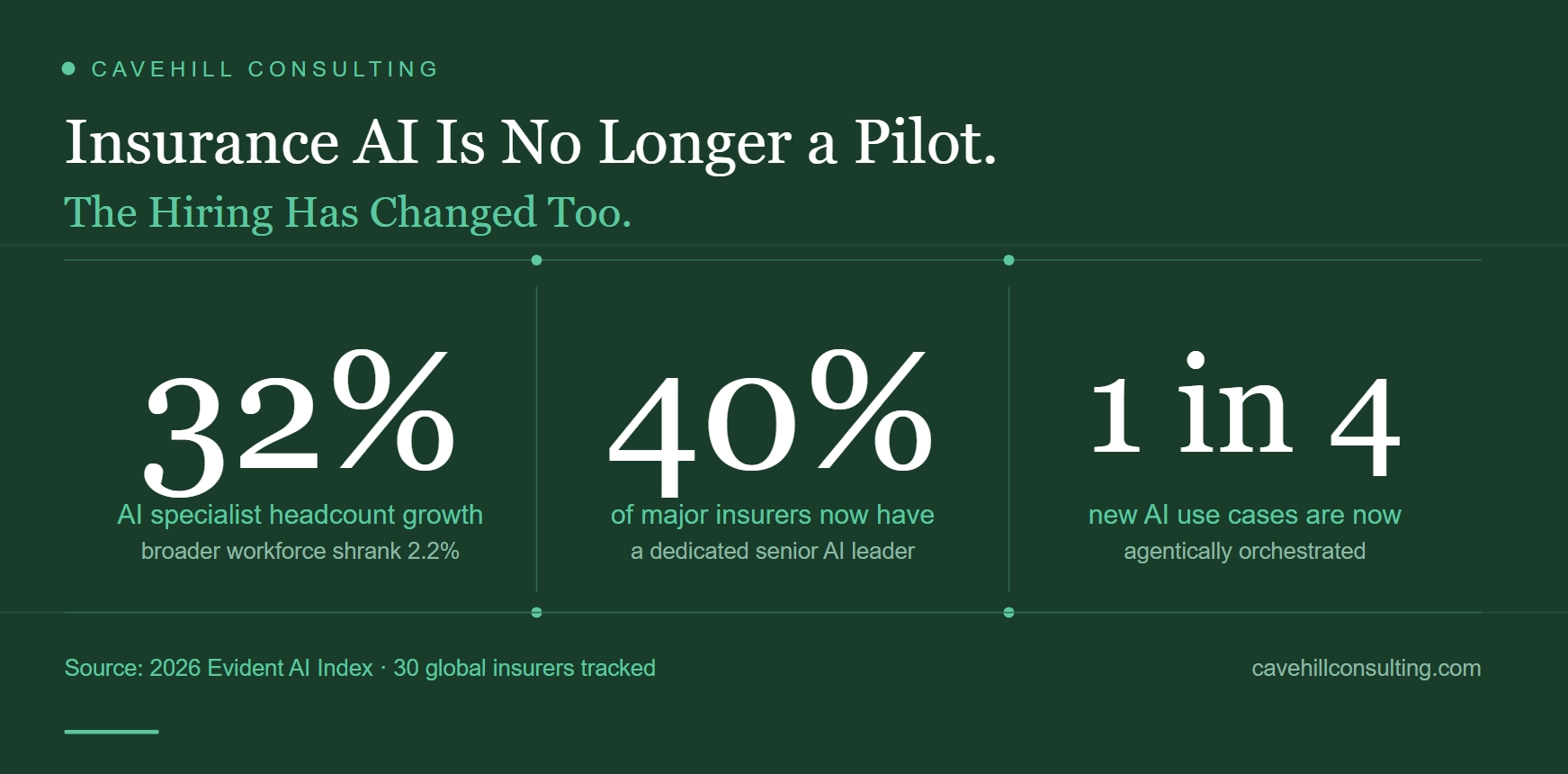
AI Governance and AI Risk Specialist has seen the steepest percentage appreciation of any function in the guide - up approximately 47% in London Market permanent salary from 2022 to 2026. The EU AI Act and the FCA's evolving supervisory expectations have collectively turned this from a niche compliance role into a critical hire. A role that barely registered five years ago now sits at board priority across every firm trying to deploy AI responsibly.
MLOps Engineer has followed a similar curve. Building a model in a notebook is straightforward. Running it reliably at scale in a regulated environment is not. The firms that moved earliest to production deployment discovered this quickly, and rates reflected the scarcity.
DORA and the Security Premium
The Digital Operational Resilience Act became enforceable on 17 January 2025. Its effect on Security Architect hiring was immediate.
Security Architect was already a strong market. DORA turned it into a non-discretionary compliance hire across every firm in scope - which, across the London Market and Dublin financial services, covers almost everyone. London Market permanent salaries now reach £155k at the top of the range. Dublin has moved in near-lockstep, with rates closing to within 5% of London equivalents for this specific role.
The pattern mirrors what IFRS 17 did for Data Architects in 2021-22. Regulatory deadlines create sudden, non-negotiable demand for a profile the market cannot produce at scale overnight.
The Dublin Story
Five years ago, Dublin technology salaries sat 15-20% below London equivalents for most roles. That gap is largely closed at the specialist end.
Post-Brexit European headquarter relocations and a local housing crisis drove wage inflation that the London comparison could not absorb. Hybrid working has removed the geographic discount that once existed for Dublin-based candidates working on UK programmes. For Data Platform Architects and Security Architects, Dublin rates now sit within 5-10% of standard London financial services benchmarks.
For FINEOS Specialists, the dynamic has inverted entirely. Dublin is the global development base for FINEOS. Local expertise is highly concentrated, and Irish rates now exceed London for this specific profile. The cost arbitrage that made Dublin an attractive alternative for carriers has been competed away at the specialist end.
What This Means for 2026
The market is not generous to generalists right now. But it continues to reward specialisation, insurance domain knowledge, and the ability to operate at the intersection of technology and regulated financial services.
The roles with the strongest demand signals share a common characteristic: either regulation creates the requirement, or the talent pool is structurally too small to meet demand, or the skill itself is recent enough that supply has not caught up with the hiring wave. In several cases, all three apply simultaneously.
Hiring decisions based on 2023 or 2024 salary data are likely to undershoot on the profiles that matter most. The guide exists to fix that.
Download the Cavehill Insurance Technology Salary Benchmarking Guide.
Permanent salaries and contract day rates for 40+ roles across London Market, regional UK, and Dublin - year by year from 2022 to 2026.
Grant Bodie is a specialist Technology and Business Change recruiter at Cavehill Consulting, placing contract and permanent professionals across insurance carriers, Lloyd's syndicates, MGAs, and InsurTechs in the UK and Ireland.
020 3955 2500 | Grant.Bodie@CavehillConsulting.com
Recent News
Our Latest Stories.